
Who’s liable for an elevator accident? Understanding premises liability and negligence

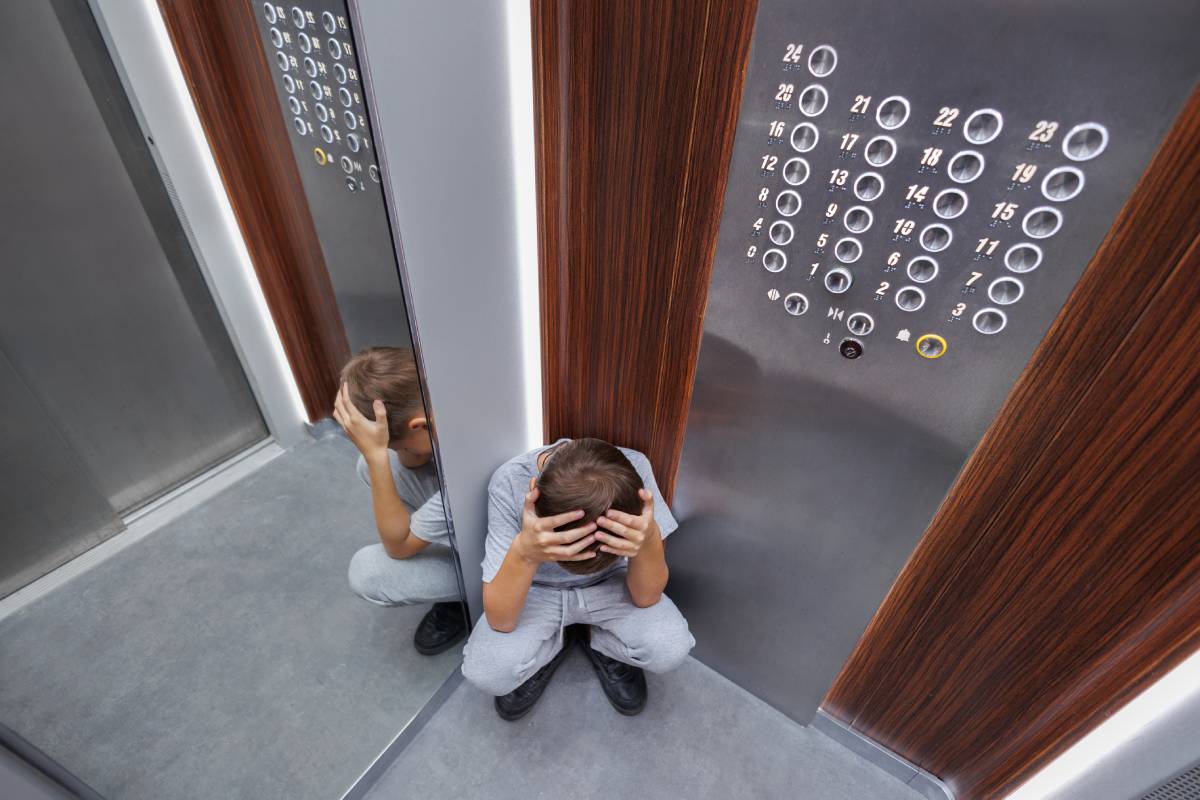
Elevators are a common feature in residential buildings, office complexes, and commercial spaces, providing convenience and accessibility.
Reviewed by Vikas Bajaj, Attorney at Law. Last reviewed November 5, 2026
However, when one malfunctions or is improperly maintained, serious accidents can occur.
Determining liability for an elevator accident involves several overlapping legal theories.
This article explains them. They are the common carrier duty California applies to these lifts, ordinary premises liability, and product liability against a manufacturer. It also covers the separate rules for public buildings.
For the practical side of a claim against a hotel, store or office building, see Can you sue a hotel or business after an elevator accident in San Diego? It covers incident reports, video and inspection records.
Premises liability and duty of care
Premises liability rules, summarized in CACI 1000, hold property owners, landlords, and managers responsible for maintaining a safe environment for visitors and tenants.
If an injury occurs due to poor maintenance, faulty repairs, or safety violations, the entity in charge of the property may be held liable.
Under this legal principle, property owners owe a duty of care to ensure lifts are regularly inspected and in proper working condition.
Why elevator owners are held to a common carrier standard
California courts have long treated the owner of a passenger elevator as a common carrier.
Civil Code section 2100 requires a carrier of persons for reward to “use the utmost care and diligence for their safe carriage.” The jury instruction on that duty, CACI 902, describes it as the care and vigilance of a very cautious person. That is a stricter standard than the ordinary care a property owner owes for a hallway or a parking lot.
CACI 903 applies the same standard to equipment: a carrier is responsible for a defect it created, knew of, or would have found with the required care.
The sources listed with that instruction include the California Supreme Court’s decision in Brown v. George Pepperdine Foundation (1943) 23 Cal.2d 256. That case held that an owner must use the utmost care in maintaining them. It also held that perfunctory inspections, even regular ones, do not meet that duty.
Product liability claims against the manufacturer
Sometimes the cause is a defect in the car or one of its parts rather than poor upkeep. Then the claim against the manufacturer can rest on strict product liability, which does not require proof that anyone was careless.
CACI 1201 covers a manufacturing defect, where the unit differed from its intended design. CACI 1204 covers a design defect judged by weighing the design’s risks against its benefits.
Claims involving public buildings
If the lift is in a county building, a public university or a transit station, the claim is against a public entity.
Government Code section 835 makes a public entity liable for a dangerous condition of its property only in two situations. Either an employee’s negligence created the condition, or the entity had notice of it in time to take protective measures. A written claim generally must be presented within six months (Government Code section 911.2).
Who can be held liable?
- Property owners and managers – Owners of commercial or residential buildings must ensure their elevators comply with safety regulations. If an accident occurs due to neglect, such as failure to schedule routine inspections or ignoring maintenance warnings, they could be held liable.
- Maintenance companies – Many property owners outsource maintenance to third-party service providers. If a maintenance company fails to detect or fix mechanical issues, they may be responsible for any resulting accidents.
- Manufacturers – If an accident results from a design or manufacturing defect, the manufacturer could be liable under product liability laws.
- Tenants or third parties – In rare cases, liability may fall on an individual who intentionally misuses or damages the elevator, causing harm to others.
Common causes of these accidents
- Mechanical failure – Worn-out cables, faulty wiring, and defective sensors can cause sudden drops or entrapment.
- Lack of maintenance – Infrequent inspections and neglected repairs often lead to hazardous conditions.
- Misleveling issues – When an elevator does not stop evenly with the floor, passengers can trip and suffer injuries.
- Door malfunctions – Faulty sensors may cause doors to close unexpectedly, leading to serious harm.
- Sudden stops and free falls – Brake failures or power interruptions can result in abrupt movements that cause injuries.
Proving negligence in an elevator accident case
To establish negligence in an elevator accident case, the injured party must prove:
- A duty of care existed (e.g., the property owner had a legal responsibility to maintain the equipment).
- A breach of duty occurred (evidence that the owner, maintenance company, or manufacturer was negligent).
- Causation, meaning the accident was a direct result of the negligence.
- Losses, including healthcare expenses, missed income, and emotional or physical distress.
Elevator injury claims: legal reference points
- Carrier duty: Civil Code section 2100 and CACI 902 set the utmost-care standard for carriers of passengers.
- Equipment defects: CACI 903 makes a carrier responsible for defects it created, knew of, or would have found with the required care.
- Constructive notice: CACI 1011 treats an owner as knowing of a dangerous condition that a reasonable inspection would have found.
- Manufacturer: CACI 1201 and 1204 state the elements of manufacturing and design defect claims.
- Public property: Government Code section 835 (dangerous condition) and section 911.2 (six-month claim).
Talk to Injury Trial Lawyers about an elevator injury
Which of these theories fits depends on who owned, operated, serviced and built the unit.
Before naming anyone, Injury Trial Lawyers looks at the inspection history, the service contract and the state operating permit file to see where the failure started.
Contact us for a consultation about your elevator injury.
Tags: personal injury lawyer Imperial Beach, premises liability