
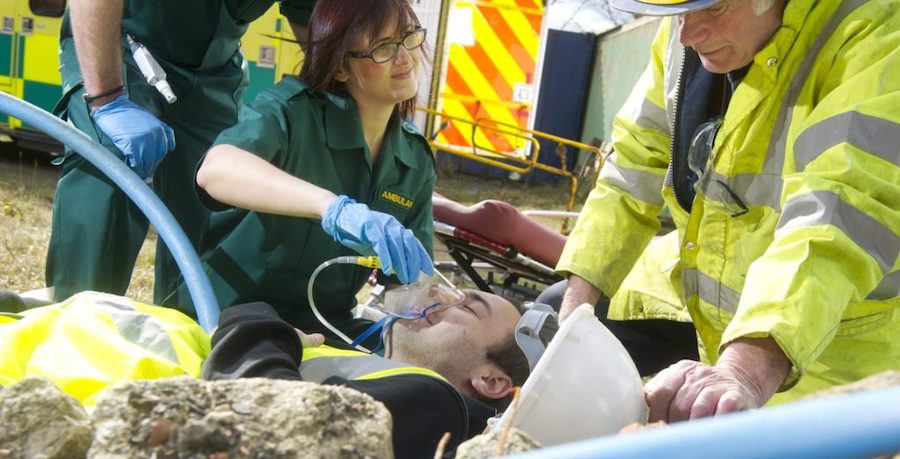
Injury Trial Lawyers is a San Diego law firm that represents people with catastrophic injuries: severe injuries that cause long-term or permanent harm, such as a traumatic brain injury, a spinal cord injury with paralysis, the loss of a limb, or deep burns. In California, most injury lawsuits must be filed within two years (Code of Civil Procedure section 335.1), and a written claim against a city, county, or state agency generally must be presented within six months (Government Code section 911.2). Our office is open 24/7 and calls are answered at (619) 525-7007.
What makes an injury “catastrophic”
California statutes do not use one fixed definition of “catastrophic injury.” In practice, the term describes injuries with lasting effects on a person’s ability to work, move, think, or care for themselves. What matters in a claim is the proof: medical records, the doctors’ opinions about future care, and evidence of how the injury changes daily life and work. California law measures tort damages as the amount that will compensate for all the detriment proximately caused by the wrongful conduct (Civil Code section 3333).
Traumatic brain injury (TBI)
The National Library of Medicine describes a traumatic brain injury (MedlinePlus) as a sudden injury that damages the brain. It can come from a blow, bump, or jolt to the head (a closed head injury) or from an object that penetrates the skull. our page on traumatic brain injury claims has the full background.
Spinal cord injury and paralysis
The spinal cord carries signals between the brain and the body. According to MedlinePlus on spinal cord injuries, most injuries begin with a blow that fractures or dislocates the vertebrae. With a complete injury, the cord cannot send signals below the level of the injury, and the person is paralyzed below that point; with an incomplete injury, some movement and sensation remain. The National Institute of Child Health and Human Development has more on spinal cord injury and rehabilitation (NICHD).
Later treatment usually includes rehabilitation, mobility aids, and assistive devices, which is why future care costs are central to these cases. See our San Diego spinal cord injury page and quadriplegia injury page.
Amputation and limb loss
MedlinePlus on limb loss lists injuries, including traffic accidents, among the common reasons people lose all or part of an arm or leg. Many amputees use an artificial limb, learning to use it takes time, and physical therapy helps. Some people have phantom limb pain, and sadness, anger, and frustration during recovery are common. A claim may need to account for prosthetic devices and their replacement, therapy, and changes in the work a person can do. More on our San Diego amputation page.
Severe burns
A burn is damage to the body’s tissues caused by heat, chemicals, electricity, sunlight, or radiation. Per MedlinePlus on burns, third-degree burns damage or destroy the deepest layer of skin and the tissue underneath, and serious burns can cause scarring, shock, and infection. Treatment for serious burns may include cleaning the wound and replacing the skin. Disfigurement is one of the noneconomic harms a jury may consider. More on our San Diego burn injury page.
What damages can cover in a catastrophic injury case
These 2026 CACI jury instructions (Judicial Council of California) include: Medical expenses, past and future (CACI 3903A): the reasonable cost of reasonably necessary medical care already received, and of care the injured person is reasonably certain to need in the future. Lost earnings (CACI 3903C): income already lost and income that will be lost in the future because of the injury. how California measures injury damages has the full background.
Deadlines that apply
Minors and people lacking capacity: the time a person is a minor, or lacks the legal capacity to make decisions, generally is not counted toward the lawsuit deadline ( Code of Civil Procedure section 352 ). This rule does not apply to claims and lawsuits against public entities, which keep their own deadlines. Read California injury claim deadlines for the shared California law.
California law explained: how catastrophic injury damages are decided
Most catastrophic injury cases are negligence cases, so the basic rules are the same as for any injury claim. What changes is the scale of the proof about the future.
Lifetime losses and life expectancy
Future medical care and lost earning capacity are often measured over the rest of the injured person’s life. CACI 3932 tells jurors how to consider life expectancy, including evidence that the injury itself shortened it, and CACI 3904A requires future economic damages to be reduced to present cash value. Lost earning capacity under CACI 3903D can be awarded even to a child or someone who was not working, because it measures the loss of the ability to earn rather than actual past wages.
Pre-existing conditions
A defendant takes the injured person as it finds them. Under CACI 3928, a person who was unusually susceptible to injury, such as someone with prior spinal degeneration, can recover for all harm the defendant’s conduct caused, even if a healthier person would have been hurt less.
More than one responsible party
Economic damages, such as medical costs and lost earnings, are joint: each responsible defendant can be required to pay all of them. Noneconomic damages are several only, so each defendant pays its own percentage of fault (Civil Code section 1431.2). In a catastrophic case with a single solvent defendant, this split can decide how much of a verdict is collectible.
Limits that can apply in vehicle cases
Under Civil Code section 3333.4, a person hurt in a motor vehicle case generally cannot recover noneconomic damages if they were driving under the influence and were convicted of that offense, or if they owned the vehicle involved and it was not insured as the law requires (with exceptions, including when the at-fault driver was convicted of driving under the influence). Economic damages remain recoverable.
Spouses and family members
A spouse or registered domestic partner of a seriously injured person may have a separate claim for loss of consortium, meaning the loss of love, companionship, comfort, care, and sexual relations (CACI 3920).
Legislative history: damages rules in catastrophic injury cases
These facts come from the history notes on each statute in the California Legislative Information database.
- Measure of damages (1872). Civil Code section 3333, the rule that damages compensate for “all the detriment proximately caused,” was enacted in 1872 and has not been amended.
- Proposition 51 (1986). Civil Code section 1431.2 was added on June 3, 1986, by initiative Proposition 51, the Fair Responsibility Act of 1986, which made each defendant’s liability for noneconomic damages several only.
- Proposition 213 (1996). Civil Code section 3333.4 was added on November 5, 1996, by initiative Proposition 213, the Personal Responsibility Act of 1996. It applies to actions in which the initial trial had not begun before January 1, 1997.
- Punitive damages. Civil Code section 3294 was most recently amended by Stats. 1992, Ch. 178, effective January 1, 1993. Subdivision (e) notes that its 1987 amendments (Stats. 1987, Ch. 1498) apply to actions in which the initial trial had not begun before January 1, 1988.
- Two-year deadline (2002). Senate Bill 688 (2002), Chapter 448, Statutes of 2002, added Code of Civil Procedure section 335.1, effective January 1, 2003, extending the deadline for injury lawsuits from one year to two.
- Minors and capacity; public-entity claims. Code of Civil Procedure section 352 was most recently amended by Stats. 2014, Ch. 144 (AB 1847). Government Code section 911.2 was most recently amended by Stats. 2016, Ch. 31 (SB 836).
Other injury types
We have separate pages for other injuries, including subdural hematoma, crushing injuries, degloving injuries, broken bones, back injuries, chest injuries after a car accident, eye injuries, cerebral palsy, anesthesia injuries, deep vein thrombosis, soft tissue injuries, whiplash, sexual assault injuries.
Trial preference for catastrophic injuries
A catastrophic injury is one that causes long-term or permanent disability and major life changes. In some cases, a party 70 or older, or a party with a condition that raises a substantial medical doubt of survival beyond six months, may seek trial preference under Code of Civil Procedure section 36. Federal injury data and prevention guidance are published by the CDC Injury Center.
Catastrophic injury questions and answers
How long do I have to file a catastrophic injury claim in California?
Generally two years from the date of injury under Code of Civil Procedure section 335.1. If a government agency may be responsible, a written claim generally must be presented within six months under Government Code section 911.2.
What if the injured person is a child or cannot make decisions after a brain injury?
Under Code of Civil Procedure section 352, the time a person is a minor or lacks legal capacity to make decisions generally does not count toward the lawsuit deadline. That rule does not apply to claims against public entities, so the six-month government claim deadline still applies.
How is the value of a brain injury or spinal cord injury claim decided?
There is no formula. Jurors are instructed to award the reasonable cost of future medical care the person is reasonably certain to need (CACI 3903A), lost earning capacity (CACI 3903D), and noneconomic damages based on their judgment of the evidence (CACI 3905A) in the 2026 CACI jury instructions. Medical and vocational evidence drives these numbers.
Does a pre-existing condition reduce a catastrophic injury claim?
Not for harm the defendant caused. Under CACI 3928, a person who was more susceptible to injury can recover for all the harm caused, even if a healthier person would have been hurt less. Damages for the pre-existing condition itself are not recoverable.
If several parties caused the injury, who pays?
Each responsible defendant can be required to pay all economic damages, such as medical costs and lost earnings. Under Civil Code section 1431.2, each defendant pays only its own percentage share of noneconomic damages.
Can a spouse recover when a partner is catastrophically injured?
Yes, through a separate claim for loss of consortium, which covers the loss of love, companionship, comfort, care, and sexual relations (CACI 3920).
Can an uninsured driver recover for pain and suffering?
Generally not in a motor vehicle case if the injured person owned the vehicle and it was uninsured, or was convicted of driving under the influence (Civil Code section 3333.4). Economic damages remain recoverable, and there are exceptions.
Can I still recover if I was partly at fault?
Often, yes. California follows pure comparative fault (Li v. Yellow Cab Co. (1975) 13 Cal.3d 804), so any recovery is reduced by your percentage of fault but is not automatically barred.
How do attorney fees work for a catastrophic injury case?
No attorney fee unless we recover. If there is no recovery, you owe no attorney fees and no case costs, as stated in your fee agreement.
How do I reach a San Diego lawyer about a catastrophic injury?
Injury Trial Lawyers is open 24/7, and calls are answered at (619) 525-7007.
Related: Catastrophic Injuries Result from Truck Driver Negligence